Your local guide to the Funk Zone — Santa Barbara’s walkable arts and wine district. Best tasting rooms, restaurants, coffee, and tips for making the most of the neighborhood.
The Best Santa Barbara Funk Zone Guide You’ll Love
A decade ago, the blocks just east of Stearns Wharf were warehouses, auto shops, and not much else. Now that same stretch — bounded roughly by State Street, Garden Street, Cabrillo Boulevard, and the 101 — is the most interesting neighborhood in Santa Barbara. The Funk Zone earned its name honestly: it’s eclectic, walkable, a little rough around the edges in the best way, and packed with tasting rooms, restaurants, coffee roasters, and galleries that feel genuinely local rather than curated for tourists. If you’re spending time in Santa Barbara and you skip the Funk Zone, you’ve missed the part of the city that residents actually get excited about.
This guide covers everything you need: the best tasting rooms on the Urban Wine Trail, where to eat before and after wine tasting, how to spend a full day here, and the timing that makes the neighborhood feel like yours rather than everyone else’s. Staying within walking distance makes the whole day dramatically easier — no car, no parking, no decisions.
What the Funk Zone Actually Is
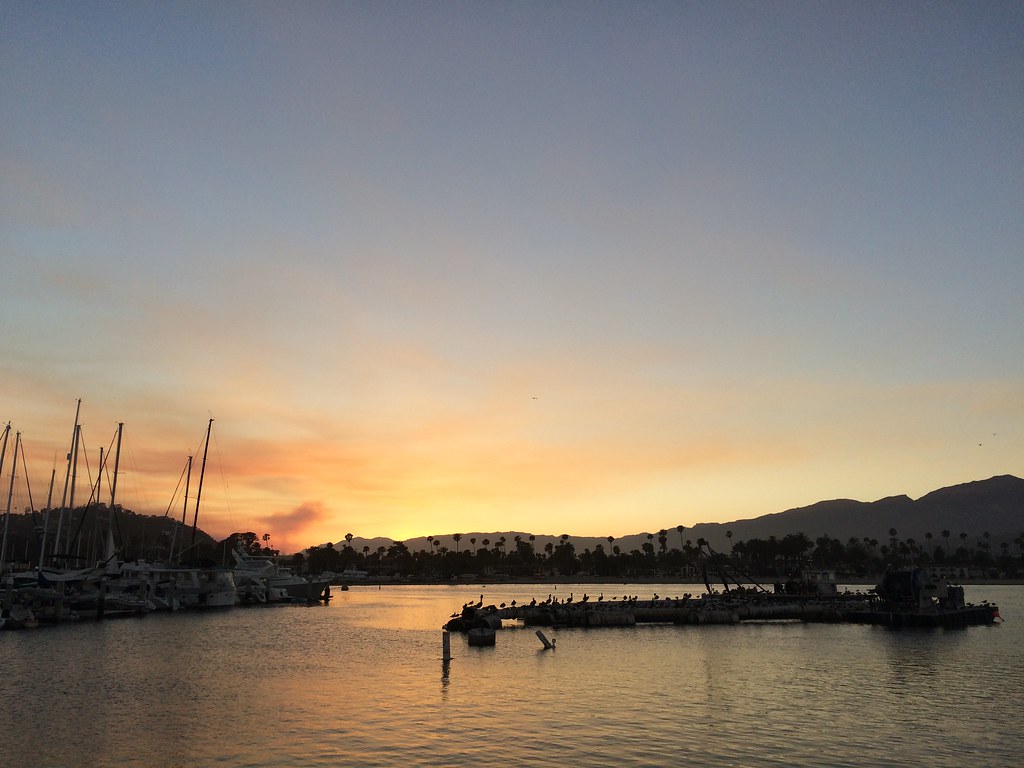
The Funk Zone is small — you can walk end to end in about ten minutes — but it’s dense. The city’s Urban Wine Trail runs through the heart of it, which means you can do serious wine tasting without ever getting in a car. That’s unusual in wine country, and it’s the neighborhood’s single biggest draw for visitors. But the Funk Zone isn’t just a wine district; it’s a full neighborhood with its own rhythm.
The streets here are a mix of converted industrial buildings, bright murals, and small-batch producers of everything from beer to coffee to ceramics. You’ll find tasting rooms sharing blocks with oyster bars, ramen spots, record stores, and boutique hotels that have been designed for people who want something other than a chain property. It’s the kind of neighborhood where you plan to stop for one glass of wine and end up spending four hours.
The Funk Zone is also genuinely walkable from the waterfront. If you’re staying near the harbor or beach, you’re a five-minute walk away. If you’re coming from upper State Street, it’s a 15-minute walk down toward the ocean. Most people who discover it on their first trip make it their home base for every trip after that.
The Urban Wine Trail: Best Tasting Rooms
The Urban Wine Trail has somewhere around 30 tasting rooms scattered across downtown and the Funk Zone, but the highest concentration — and the most walkable cluster — is in the Funk Zone itself. You don’t need to hit all of them. Here’s where locals actually go.
Municipal Winemakers is the neighborhood anchor. It’s a casual, high-ceilinged tasting room with communal tables and wines made from Santa Barbara County fruit. The pours are generous, the staff is knowledgeable without being precious about it, and the vibe is social in a way that makes solo tastings feel comfortable rather than awkward. If you’re doing one Funk Zone tasting room, start here.
Carr Winery is a few blocks away and worth the walk. They specialize in Rhône-style wines and Pinot Noir, and the winemaking philosophy here is less intervention, more expression of the fruit. The tasting room has a relaxed, almost living-room feel. This is where you go when you want to actually talk about the wine rather than just drink through a flight.
Pali Wine Co. is larger than most Funk Zone tasting rooms and has a courtyard setup that works well for groups. Good Pinot Noir and Chardonnay, friendly service, and enough space that it doesn’t feel crowded even on busy weekend afternoons.
Lumen Wines and Riverbench round out the strong options in the immediate area. Lumen leans toward skin-contact whites and natural wine adjacent styles — if that’s your thing, it’s genuinely exciting. Riverbench is more classic Santa Barbara County Chardonnay and Pinot, well executed and consistently good.
Tasting fees vary but most run $15–$25 for a flight, often waived with a bottle purchase. On weekends, booking ahead for the more popular rooms is worth it. Guided Urban Wine Trail tours are available if you’d rather have someone else handle the navigation — they also tend to get you into back rooms and conversations that walk-in tastings don’t.
One practical note: the Urban Wine Trail map is free at most tasting rooms or downloadable from the Santa Barbara Vintners website. Grab one. It shows the full list with hours, walking distances, and what each room specializes in. A good insulated wine tote is worth having if you’re planning on buying bottles to take home — most rooms will wrap for you, but a carrier makes the walk back to your hotel much easier.
Where to Eat in the Funk Zone
📷 Photo needed: Funk Zone outdoor restaurant patio
The food scene in the Funk Zone has matured significantly over the last few years. You no longer need to leave the neighborhood for a full day — breakfast through dinner is covered.
The Lark is the anchor restaurant and it’s genuinely good. Farm-to-table California cuisine in a converted railway freight building, with an open kitchen and a menu that rotates with what’s local and seasonal. The happy hour at the bar is one of the better deals in the city — smaller plates and well-priced wines from Santa Barbara County producers. Book ahead for dinner on weekends; it fills up.
Lucky Penny, next door to The Lark, is the more casual option from the same ownership group. Wood-fired pizza, salads, shareable plates. Good for lunch or an early dinner when you want something satisfying without the commitment of a full table-service meal. The outdoor patio is a reliable spot to catch good weather.
Santa Barbara Fish Market at the edge of the Funk Zone near the harbor does fresh local seafood in an extremely casual format — walk up, order, eat at a picnic table. Santa Barbara spot prawns when they’re in season, fish and chips, oysters. This is where you eat if you want to understand what the local fishing boats actually bring in.
Corazon Cocina is a Mexican kitchen run by a Santa Barbara local doing regional Mexican food with local ingredients. The fish tacos use fresh-caught fish, the salsas are made in-house, and the whole operation feels like someone cooking what they actually want to eat rather than what they think tourists expect. Go for lunch.
Handlebar Coffee has a Funk Zone location and it’s where locals working in the neighborhood start their mornings. Single-origin espresso, good filter coffee, and a physical space that manages to feel both designed and genuinely relaxed. If you’re doing a morning wine trail walk, start here.
Beyond Wine: What Else to Do
The Funk Zone is primarily a food and wine destination, but there’s more to fill a day here than tasting rooms.
The Santa Barbara Public Market at the north edge of the neighborhood has a cluster of food vendors under one roof — good for sampling multiple things without committing to one restaurant. Coffee, charcuterie, tacos, pastries, wine by the glass. It’s a useful midday option if your group has different appetites.
Galleries and studios are scattered through the neighborhood. The Funk Zone has maintained a working-artist presence even as the restaurants and wine bars have moved in. Look for open studio signs on weekends — several ceramic and painting studios welcome visitors. The Sullivan Goss Gallery is one of the more established art spaces in the area and worth ducking into if you have an interest in California representational painting.
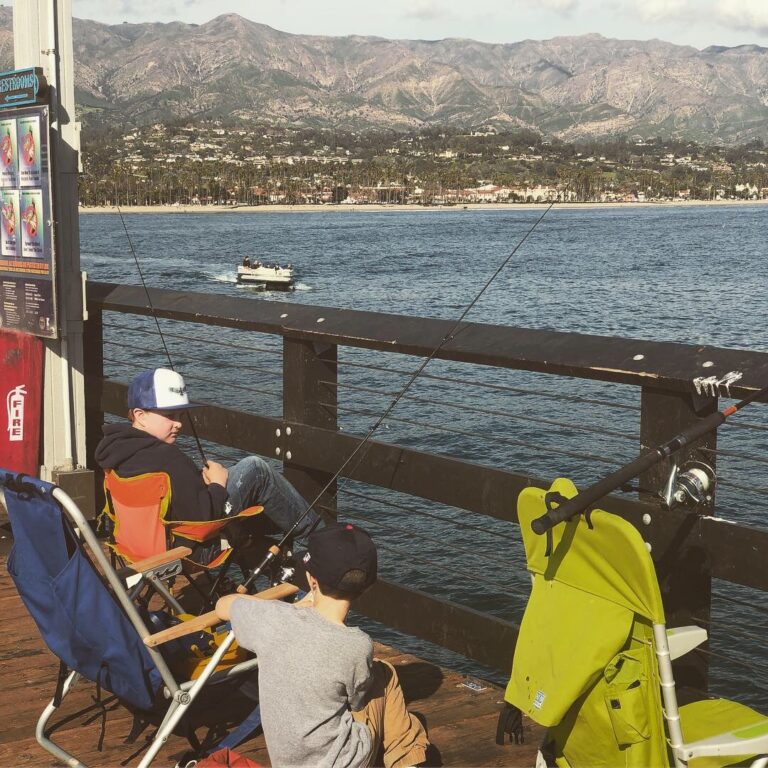
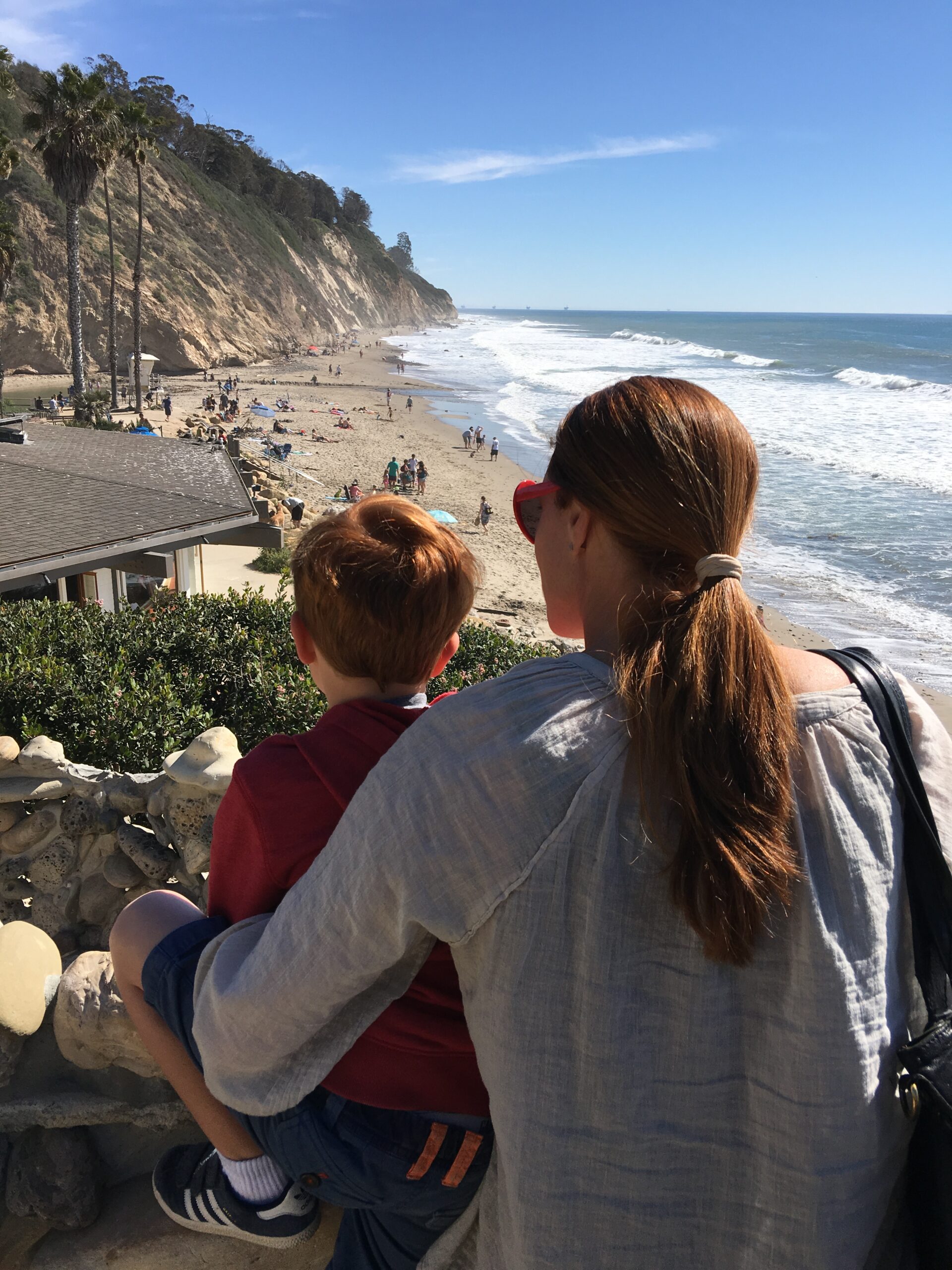
The beach is literally one block south. East Beach runs east from the wharf along Cabrillo Boulevard and it’s one of the better urban beaches in California — wide, clean, backed by palm trees, with the mountains visible behind the city. After a morning of tasting rooms, walking down to the water and sitting in the sand for twenty minutes resets everything. Bring a towel. A packable beach blanket is worth keeping in your bag if you’re planning to split your day between the Funk Zone and the beach — the sand here is fine enough that a thin blanket makes a real difference.
If you want to see more of the waterfront, the Cabrillo Bike Path runs west from East Beach all the way to Goleta — about 3.5 miles each way, flat, paved, and one of the better urban bike rides in Southern California. Wheel Fun Rentals operates along Cabrillo Boulevard and rents cruisers, tandems, and surreys by the hour. It’s an easy add-on to a Funk Zone afternoon.
How to Spend a Full Day in the Funk Zone
If you’re giving the Funk Zone a proper day, here’s how locals would structure it.
Morning: Start at Handlebar Coffee. Pick up the Urban Wine Trail map from the first tasting room you visit. Most rooms don’t open until 11am or noon, so a morning walk around the neighborhood — checking out murals, poking into any open galleries, walking down to the beach — is a good way to use the time before the tasting rooms come alive.
Late morning to early afternoon: Do two or three tasting rooms. Municipal Winemakers first, then Carr or Pali depending on what you’re in the mood for. This is the window when the rooms are least crowded and the staff has the most time to talk. Buy a bottle or two for the afternoon if you find something you love.
Lunch: Corazon Cocina for tacos, or Lucky Penny for pizza. Both are casual, fast enough that you don’t lose momentum, and good enough that you’re actually fed rather than just snacked.
Afternoon: One or two more tasting rooms, then the beach. The afternoon sun on East Beach from about 2pm to 5pm is reliably good — warm enough to sit, not so hot that you want to leave. Walk back up through the neighborhood around 5pm when the happy hours start.
Evening: The Lark for dinner. Book it before you start your day — they fill up on weekends. If you didn’t book ahead, the bar is a solid fallback. If you haven’t booked a place to stay yet, hotels near the Funk Zone let you walk back after dinner rather than drive.
The whole day is walkable. You don’t need a car once you’re in the Funk Zone. That’s not something you can say about most California wine experiences, and it’s genuinely one of the things that makes this neighborhood worth building a trip around.
Getting There and Parking
📷 Photo needed: Funk Zone neighborhood street scene
The Funk Zone sits between the 101 and the beach, roughly between Chapala and Garden Streets east-west, and between Cabrillo Boulevard and Ortega Street north-south. That’s a walkable grid that takes about 10 minutes to cross in any direction.
If you’re driving in, the easiest approach is the Lot 9 public parking structure on Yanonali Street — it’s right in the heart of the neighborhood and usually has availability even on weekends. Metered street parking on the surrounding blocks runs about $1.50–$2.50 per hour. The first two hours are often enough to get oriented; if you’re staying the day, the structure is the more practical choice.
From downtown hotels or upper State Street, the walk down to the Funk Zone is about 15 minutes on flat ground. From the harbor-side hotels along Cabrillo, it’s closer to 5 minutes heading east. Either way, walking is the right call — parking stress is the one thing that can throw off an otherwise easy day here.
If you’re coming from Los Angeles, Santa Barbara is about 90 minutes up the 101 depending on traffic. The Funk Zone is one of the first things you hit as you approach the city from the south, which makes it a natural first stop before checking in to wherever you’re staying. Hotels close to the Funk Zone put you in easy walking distance of everything in this guide — worth prioritizing when you’re choosing where to stay.
Best Time to Visit the Funk Zone
The Funk Zone is a year-round destination, but timing matters.
September and October are the best months, full stop. The marine layer that settles in during May and June has cleared, summer crowds have thinned, and the light in the afternoon is the kind of warm golden quality that makes everything look better than it already is. Wine harvest is happening in the Santa Ynez Valley, which means tasting rooms have new releases and the energy in the neighborhood is noticeably higher. If you can build a trip around September or October, do it.
Summer weekends (July–August) are busy. The tasting rooms fill up, waits at popular restaurants stretch to 45 minutes, and parking gets genuinely difficult. The neighborhood handles it well — it was designed for foot traffic — but if you’re hoping for a relaxed, unhurried experience, aim for a weekday or consider arriving early and leaving before the afternoon rush.
Winter (November–February) is underrated. Santa Barbara doesn’t get cold the way the rest of the country does — most winter days are in the 60s, jacket weather at most, and the tasting rooms are uncrowded enough that you can have real conversations with the people pouring. This is when locals actually make it down to the Funk Zone for a weeknight dinner without planning around a crowd. Whale watching season is running concurrently out of the harbor — whale watching tours out of Santa Barbara run through March — which gives you an easy two-part day: morning at sea, afternoon in the Funk Zone.
The Funk Zone is one of the places in Santa Barbara that justifies coming back. The neighborhood changes, new tasting rooms open, and the restaurants keep getting better. Locals who’ve lived here for years still find reasons to spend an afternoon here on a slow weekend. That’s the best endorsement we can give it.
Ready to plan your visit? Find a hotel near the Funk Zone and walk to everything on this list — no car required once you’re here.