Everything locals know about surfing Rincon Beach — the three sections, best swell windows, parking, etiquette, and gear. The Queen of the Coast deserves your full attention.
Surfing Rincon Beach: The Best Local Guide You’ll Love
Ten miles east of Santa Barbara, right at the Ventura County line, Rincon Point breaks over a cobblestone reef and produces some of the longest, most perfect right-hand waves in California. Surfers have been calling it the Queen of the Coast since the 1930s. On a good day in November — a solid northwest swell, offshore wind, nobody in the water yet — it lives up to every word of that.
It also crowds up fast, it has a real local vibe, and the parking situation is its own puzzle. This guide covers all of it. If you’re not ready to paddle into a crowded point break yet, a Santa Barbara surf lesson at Leadbetter Beach is the right warm-up — gentler waves, no crowd politics, and you’ll be ready for Rincon sooner.
What Makes Rincon Special
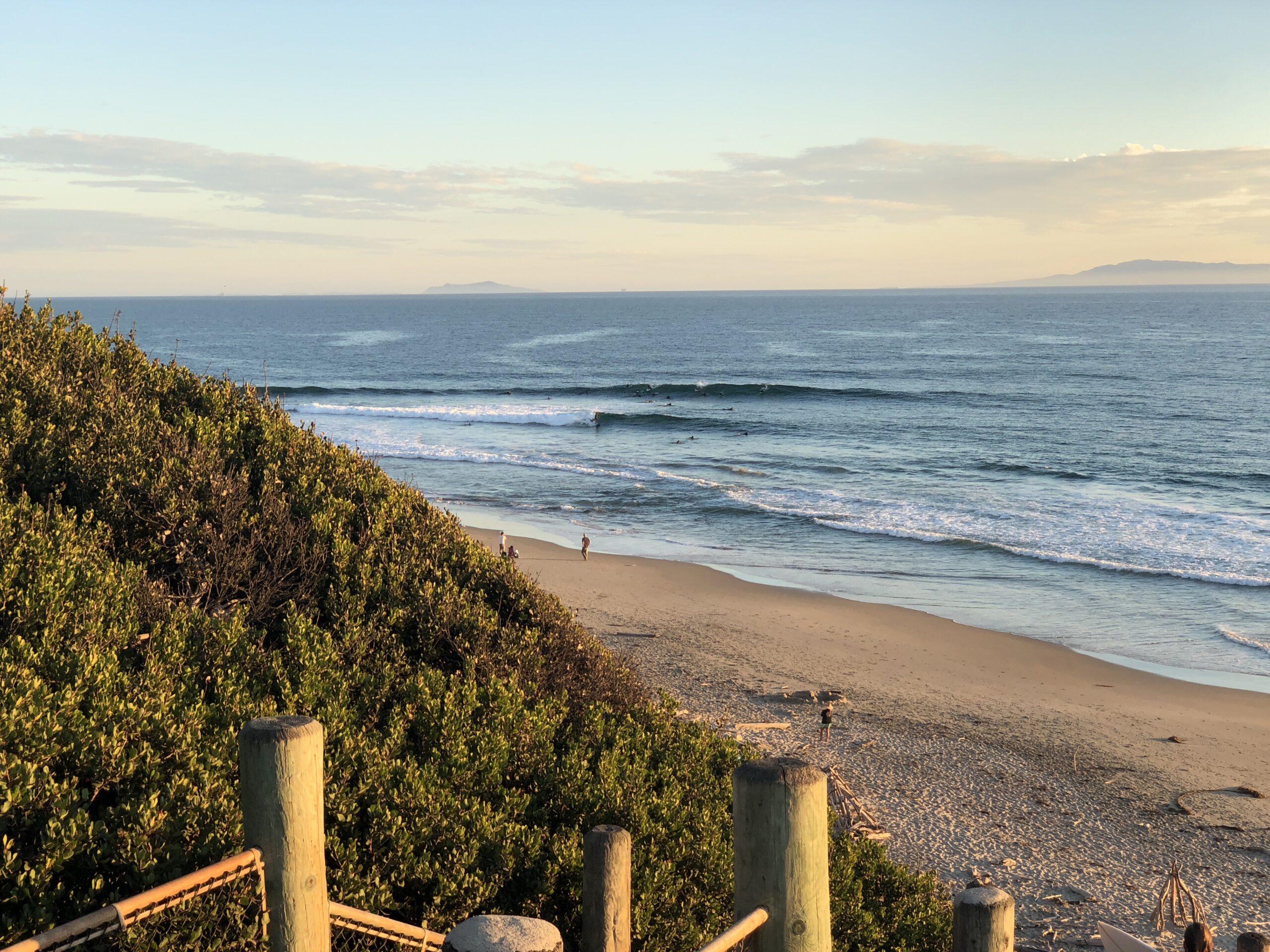
Rincon is a point break — waves wrap around a rocky cobblestone point and peel consistently in one direction, right, for a very long distance. On the best swells, a single wave can carry you from the top section all the way through the middle and into the cove — a ride of 200 yards or more. That kind of length is rare anywhere in the world.
The wave shape rewards rail surfing: long, drawn-out turns, trim lines, and footwork. It’s not a powerful, barreling wave — it’s a canvas. Which is why Rincon has always attracted longboarders and stylish shortboarders more than the air-game crowd.
The cobblestone bottom means the wave breaks consistently in the same place every time. It also means booties are a good call in winter — the rocks are sharp and the paddle-out is over them.
Local Tip: The best Rincon days are when everyone else is still sleeping. Paddle out at first light before the wind comes up and before the crowd builds. By 9am on a good swell day, the lineup can have 80 people in it.
The Three Sections: Indicator, the Point, and the Cove

Rincon breaks in three distinct sections depending on swell size and direction.
Indicator is the top section — the furthest outside. It only turns on when the swell is big enough to wrap all the way around the point. When it’s working, it connects into the middle section for the longest rides of the day. This is where the best surfers position themselves on big days.
The Point is the main section — the one most people mean when they say Rincon. It breaks right off the rocky point itself, wraps through a long wall, and is rideable on swells as small as 3 feet. This is the heart of the lineup and where the crowd concentrates.
The Cove is the inside section — a slower, mushier wave that’s more forgiving and less crowded. It’s ideal for beginners on small days, or for experienced surfers who want to escape the main peak and catch a few fun ones alone.
Local Tip: On medium swells (4–6ft), the Point and Cove often connect. Catch the wave at the Point, make it through the flat section, and you pick up the Cove wall for another 50 yards. That’s the Rincon connection everyone talks about.
When to Surf Rincon
Rincon’s season runs from October through March. The break needs northwest swell — the kind that builds in the Gulf of Alaska and tracks south down the California coast. Summer south swells hit Rincon at a bad angle and produce weak, short-period waves. Fall is when it wakes up.
October and November are the sweet spot. The crowds from summer have thinned, the water is still warm from summer (low 60s, wetsuit optional for the tough), and the first northwest swells of the season arrive clean and uncrowded. By December through February the waves are bigger and more consistent, but the water drops to the high 50s and a 4/3mm wetsuit is necessary.
The wind matters as much as the swell. Rincon needs offshore or no wind — the afternoon onshore sea breeze that blows up and down the coast from noon onwards kills the surface. Morning sessions are almost always better. Check Surfline’s Rincon forecast and aim for the first few hours after sunrise.
Local Tip: A 2–3ft Rincon with offshore wind and nobody out is better than a 6ft Rincon with 60 people. Watch the forecast for mid-week swells — the crowd thins dramatically on Tuesday and Wednesday mornings even during peak winter.
Getting There and Parking

Rincon is at the end of Bates Road off US-101, right at the Santa Barbara/Ventura county line. From downtown Santa Barbara it’s about 20 minutes south on the 101. From Ventura it’s 15 minutes north.
Parking is the honest challenge. There’s a small free lot at Rincon Point that fills by 7am on any good swell day. There’s also parking along Bates Road and in the Rincon Beach County Park lot above the point ($). On busy days, people park on the highway frontage road and walk down — it’s common, just watch the signs.
The walk from the lot to the water is short — maybe 3 minutes over the cobblestones to the point. Bring a bag for your gear; there are no lockers.
Local Tip: If the main lot is full, there’s additional parking at Rincon Beach County Park (the upper lot). It’s a slightly longer walk but usually has space even on crowded days. Day-use fee is a few dollars.
Staying nearby? Santa Barbara coastal hotels put you 20 minutes from Rincon — close enough for a dawn patrol without an early road trip.
Gear and What to Wear
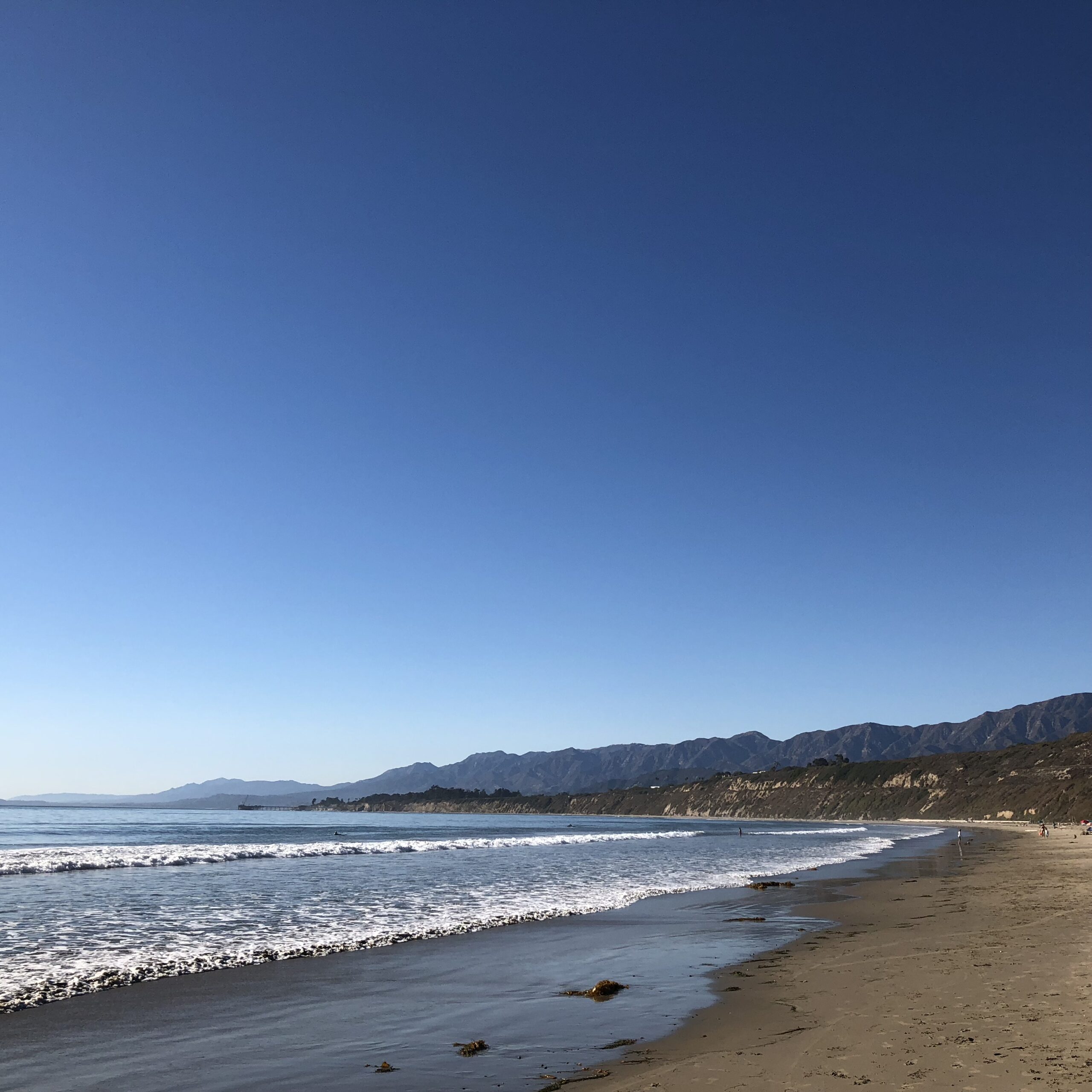
The right equipment makes a real difference at Rincon.
Wetsuit: October through April you’ll want a 4/3mm fullsuit. May through September a 3/2mm or spring suit works. The water at Rincon runs cooler than the main Santa Barbara beaches because of the coastal orientation — plan for a degree or two colder than you’d expect.
Booties: Optional in summer, worth it in winter. The cobblestone entry is sharp and slippery at low tide. A thin pair of 3mm surf booties keeps you comfortable on the walk-in and doesn’t add much bulk in the water.
Board: Rincon rewards longer boards. A longboard or a mid-length (7’6″ to 9′) gives you the paddle speed to catch waves early and the length to trim through the flat sections between the peaks. Shortboards work, but you’ll miss more waves and lose the connection between sections. If you’re renting, get something longer than you normally ride.
No rentals at Rincon itself — pick up a board at Carpinteria Surf Company (5 minutes away) or one of the Santa Barbara surf shops before you drive down.
Local Tip: Rincon has a real wax situation — the cobblestones are covered in it. Don’t step on the rocks near the lineup if you can avoid it, and expect your leash to pick up debris.
Surf Etiquette at Rincon
Rincon has a well-established local surf community and a real pecking order in the water. Respecting the lineup makes for a better session for everyone.
The basic rules apply everywhere but matter more here: don’t drop in (take a wave someone else is already on), don’t snake (paddle around someone to get priority), and wait your turn at the peak. At Rincon, with its long walls, snaking is obvious and the locals notice.
If you’re new to Rincon, start at the Cove rather than paddling straight to the main Point. Surf a few waves, get a feel for the flow, and earn your spot in the lineup gradually. The crowd at Rincon is protective but not hostile if you’re respectful.
Don’t take every wave. Rincon on a good day has plenty to go around — letting sets pass and giving priority to others actually results in more waves for you over the course of a session, because the crowd stays positive.
Local Tip: The best surfers at Rincon are there almost every good day. Learn their faces. Paddling out with a nod and a “good morning” goes further than you’d think.
Beyond Surfing: What Else to Do Nearby
Carpinteria is 5 minutes up the coast — a small beach town with good tacos, a great state beach for families and camping, and a genuine local feel. Carpinteria State Beach has calm water and is one of the best spots on the coast for kids. After a morning session at Rincon, breakfast in Carpinteria is the move.
Heading back toward Santa Barbara, the Gaviota Coast stretches 30 miles of mostly undeveloped shoreline — El Capitan and Refugio State Beaches are 20 minutes west and worth combining into a longer trip. Our guide to El Capitan State Beach camping covers everything you need for an overnight.
If you want a guided surf lesson rather than paddling out alone, Santa Barbara surf lessons run out of Leadbetter Beach in town — it’s a better learning environment than Rincon for beginners, with softer sand bottom and gentler waves.
Local Tip: The stretch of 101 between Rincon and Santa Barbara is one of the most beautiful highway drives in California. Stop at any of the pullouts and just watch the ocean for a minute. It’s worth it.
Ready to make it happen? Book your Santa Barbara base at a coastal hotel in Santa Barbara and plan your dawn patrol from there. The drive to Rincon is 20 minutes — worth every early alarm.
Follow SeeSB for more Santa Barbara guides.