
Your local’s guide to the Santa Ynez Valley wine country: top wineries in Los Olivos, Ballard Canyon, and Santa Rita Hills, plus when to go, what to taste, and how to get there from Santa Barbara.
The Best Santa Ynez Valley Wine Guide You’ll Love
Most people who visit Santa Barbara discover the Santa Ynez Valley by accident — they follow a tip from their hotel, drive forty-five minutes north over the San Marcos Pass, and come back three hours later with a case of wine and plans to return. The valley earns that reaction. It’s a genuine wine region, not a theme park, and the wineries here are producing Pinot Noir, Syrah, and Chardonnay that compete with anything in California.
This guide covers the valley properly: the sub-appellations worth understanding, the wineries that consistently deliver, the logistics that matter, and a few things the tasting-room brochures leave out. Whether you’re driving up for a single Saturday or building a longer stay, you’ll leave with a clearer picture of what makes Santa Ynez Valley wine country worth the trip.
One upfront note on timing: September through November is when the valley is at its best. Harvest is underway, crush events fill the weekends, and you can sometimes smell the fermentation from the road. That said, the wines and the landscape are excellent year-round — winter weekends in particular mean shorter lines and better conversations with the people actually making the wine. Book a guided Santa Ynez Valley wine tour if you want the full experience handled start to finish.
Understanding the Santa Ynez Valley Appellations
The Santa Ynez Valley AVA is a large umbrella covering several distinct growing zones, each with a different personality. Knowing the basic geography helps you understand why a Pinot from Santa Rita Hills tastes nothing like a Cabernet from Happy Canyon.
Santa Rita Hills sits at the western edge of the valley, open to cold Pacific air that funnels in through the Santa Ynez River gap. It’s one of the coolest wine-growing regions in California, and that cold air produces Pinot Noir and Chardonnay with bright acidity and real structure. Sanford, Melville, and Sea Smoke all farm here. If you care about California Pinot, the Santa Rita Hills are worth a detour.
Ballard Canyon is a younger sub-AVA running north-south through the middle of the valley. The orientation creates temperature swings — warm days, cool nights — that suit Syrah and Grenache particularly well. Stolpman and Beckmen are the names you’ll hear most often from people paying attention to this appellation. The wines tend to be savory, structured, and age-worthy in a way that surprises people expecting something fruit-forward.
Los Olivos District is the warmest part of the valley, and it shows in the wines — more Bordeaux varieties, richer whites, fuller-bodied reds. It’s also where most of the tasting rooms cluster in the town of Los Olivos, which makes it the easiest part of the valley to explore on foot.
Happy Canyon is the easternmost sub-AVA, warmer and more sheltered. Cabernet Sauvignon and other Bordeaux varieties do well here. It’s less visited than the western appellations but produces wines with serious structure if you know where to look.
You don’t need to memorize all of this. But if you’re tasting at Sanford and then driving to Stolpman, knowing that you’re moving from a cold-climate Pinot appellation to a warm-climate Syrah zone explains a lot about why the wines taste so different.
The Wineries Worth Your Time
These are the places locals actually recommend when friends visit. Not every winery in the valley is listed here — there are over 130 of them — but these are the ones that consistently deliver across quality, experience, and the intangible of feeling like you’re somewhere real.
Beckmen Vineyards (Los Olivos) is the first stop on most serious wine trips into the valley. They farm organically and biodynamically on estate land in Ballard Canyon, and the Syrah — particularly the Purisima Mountain Vineyard bottling — is as good as California Syrah gets. The property has picnic tables under oak trees and a duck pond that makes everything feel unhurried. Arrive early on weekends and you’ll often have the grounds largely to yourself. Walk out with the estate Syrah and whatever single-vineyard bottling they’re currently pouring.
Stolpman Vineyards (Los Olivos) has become one of the most talked-about producers in the valley, and the reputation is earned. Their Ballard Canyon Syrah is serious wine — savory, structured, built to age — and their Sangiovese program is unusual in California and genuinely exciting. The Los Olivos tasting room on Grand Avenue is small and the staff knows the wines deeply. Reserve the tasting in advance on harvest weekends; they fill fast. The Hilltop block Syrah is worth the extra cost of the reserve flight. Book a guided Santa Ynez Valley wine tour if you want a knowledgeable guide handling the driving while you focus on what’s in the glass.
Sunstone Winery (Santa Ynez) looks like it was transplanted from Provence — limestone buildings, olive trees, a barrel cave cut into the hillside. They focus on Bordeaux varieties rather than the Pinot and Syrah that dominate the valley, which makes them a useful counterpoint on any multi-stop day. The estate Cabernet Franc is the wine to try; the cave tour, when they’re running it, gives you a sense of how seriously they take the farming and the aging program. Sunstone also hosts weddings on weekends, so call ahead to confirm tastings aren’t displaced by an event.
Sanford Winery (Santa Rita Hills) is a pilgrimage for anyone who cares about California wine history. Richard Sanford planted Pinot Noir in the Santa Rita Hills before anyone believed the climate would work, and the La Rinconada vineyard he developed is still producing benchmark Pinot. The tasting room is low-key and the wines are serious. If you’ve been drinking valley Syrah all morning, Sanford’s cold-climate Pinot is a reminder of how much terroir actually matters.
Melville Winery (Santa Rita Hills) farms Pinot Noir, Chardonnay, and Syrah on estate land in the Santa Rita Hills. The wines are consistent and well-priced relative to the quality, and the tasting room has a spacious, unpretentious feel that works for groups. Their estate Chardonnay is one of the better values in the appellation — crisp, mineral, nothing like the butter-bomb California Chardonnay stereotype.
Qupé (Los Olivos) has been making Rhône-style wines here since the 1980s and has stayed true to that focus while the valley around it changed dramatically. The Marsanne and Roussanne are hard to find elsewhere and worth tasting in person. If you’ve been drinking Pinot all morning, a white Rhône blend from Qupé is a good palate reset — and a reminder that Santa Barbara County grows excellent white wine too.
Fess Parker Winery (Los Olivos) is large, professionally run, and popular for good reasons: reliable Syrah and Chardonnay, a spacious tasting room, dog-friendly grounds. It’s not the most intimate experience in the valley, but it’s consistent and handles groups well. Don’t dismiss it for being well-known.
Los Olivos: The Village Worth Exploring on Foot
Los Olivos is a two-block town on Grand Avenue, and everything worth doing is walkable. There are tasting rooms, art galleries, a couple of good restaurants, and a general-store energy that somehow hasn’t been crushed by tourism. Sunday mornings here are the best time to arrive — the Saturday crowds have cleared, the light is good, and the winemakers are sometimes still around.
Beyond Stolpman and Qupé, the Grand Avenue strip has a dozen tasting rooms worth exploring. Brander Vineyard is one of the oldest producers in the valley and still making excellent Sauvignon Blanc and Bordeaux blends. Andrew Murray Vineyards focuses on Rhône varieties — Syrah, Grenache, Viognier — and pours well at a reasonable price point.
For food, Los Olivos Café on Grand Avenue is the reliable choice: good wine list, seasonal menu, shaded patio. It gets crowded by noon on Saturdays. Arriving before 11:30am or after 2pm solves the wait problem. Los Olivos Wine Merchant and Café is the other anchor — part wine shop, part restaurant — and the cheese and charcuterie boards work well as a late morning reset between tasting stops.
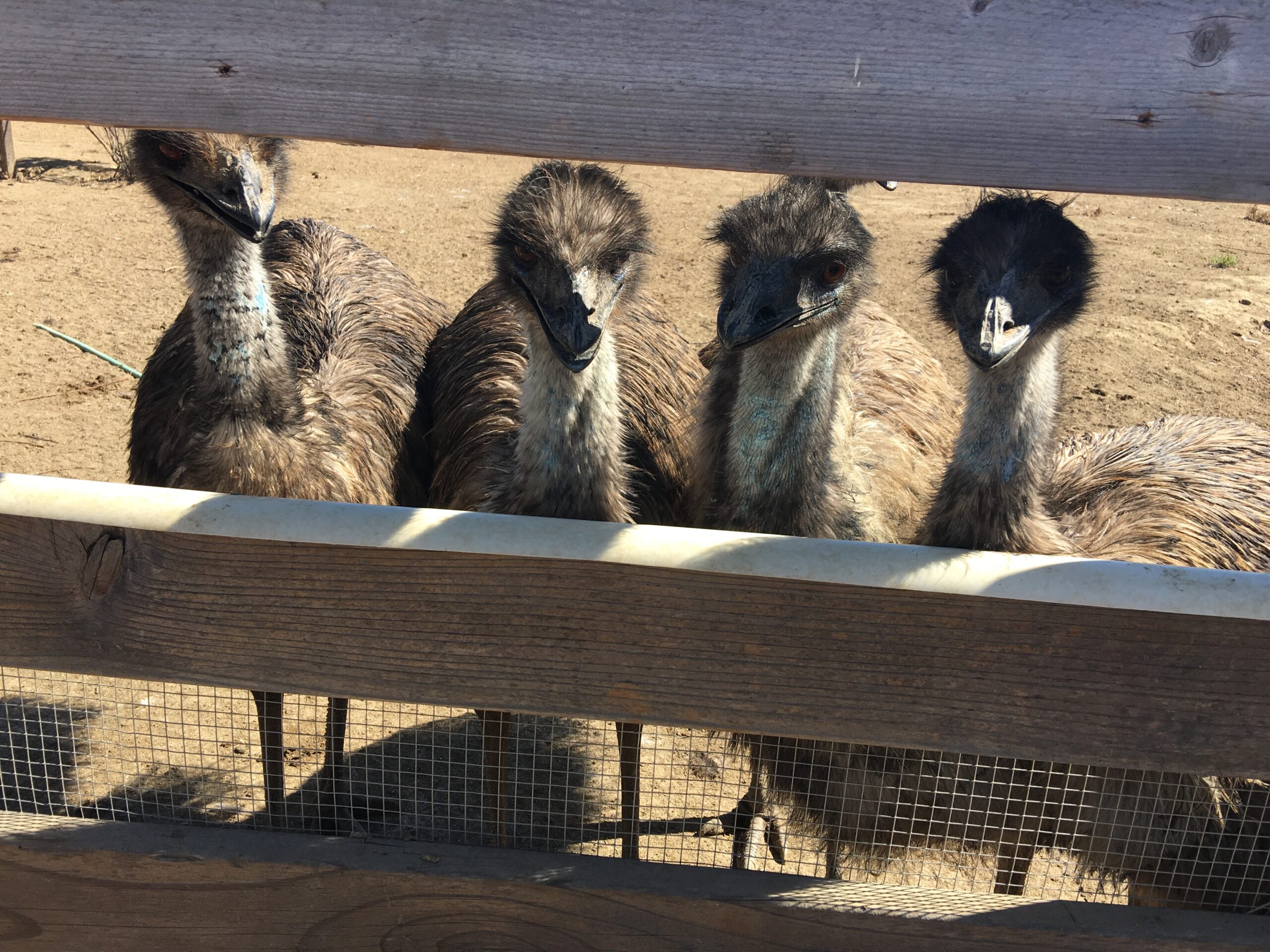
If you’re traveling with anyone who needs a break from wine, the Santa Ynez Ostrich Farm on Refuge Road is a short drive from Los Olivos and genuinely entertaining. You can feed the birds and walk the property — it’s been operating for years and locals recommend it almost apologetically before admitting they actually enjoy it. It works especially well with kids.
Getting to Santa Ynez Valley from Santa Barbara
From Santa Barbara, you have two routes north into the valley. The choice matters.
Highway 154 over San Marcos Pass adds about fifteen minutes versus the 101 but is the better drive. You climb into the mountains, pass Cold Spring Arch Bridge, and descend through oak-covered hills into the valley with Cachuma Lake below you. On a clear morning, it’s one of the better drives in Southern California. Take 154 on the way out, 101 on the way back if you’re tired — the 101 through Buellton is faster but has nothing to look at.
US-101 through Buellton is the faster option and the right call if you’re coming from south of Santa Barbara or if you’re heading directly to Santa Rita Hills wineries like Sanford or Melville. From the 101/246 interchange in Buellton, the Santa Rita Hills are west on Highway 246 and Los Olivos is east — you can use Buellton as the hub for a day that covers both sub-appellations.
Drive time from downtown Santa Barbara: 40–55 minutes to Los Olivos depending on route and traffic. The valley is not a hard day trip. You can leave Santa Barbara at 10am, hit two or three wineries, have lunch in Los Olivos, and be back in the city by 5pm without feeling rushed.
Should You Book a Guided Tour?
If everyone in your group wants to taste seriously throughout the day, a guided tour is the smart call. The valley’s best wineries are spread across 30+ miles — Sanford is west near Lompoc, Beckmen and Stolpman are near Los Olivos, Sunstone is in between. Connecting them while tasting is a logistics problem that a driver solves completely.
The better tour operators run small groups (6–10 people) and stop at three or four wineries rather than rushing through seven. They’ll have standing relationships with tasting room staff, which sometimes translates into access to library pours or a winemaker who comes out to talk. That’s a different experience from walking in cold off the street. Browse Santa Barbara wine country tours on Viator — look for small-group options with a guide who knows the appellations, not just a shuttle service.
If you’re driving yourself, designate a driver genuinely — the roads between the valley and Santa Barbara over the pass are winding, and the responsible thing to do is plan for it before you leave. Wineries will call you a rideshare if you’ve lost track of your pours. Nobody will look at you sideways for asking.
One practical item for self-drivers: bring a cooler or an insulated tote for bottles. Car trunks in summer reach temperatures that will ruin wine in under an hour. A good insulated wine tote handles the drive home and doubles as a picnic carrier when you’re eating on winery grounds.
Where to Stay in Wine Country

Staying in the valley changes the trip. Santa Barbara city hotels are more expensive and further from Saturday and Sunday’s action; base yourself in Solvang or Los Olivos and you’re ten minutes from everything without a mountain pass in the morning.
Solvang is the most practical base. The Danish village aesthetic is campy and visitors know it — but the bakeries are genuinely good (aebleskiver with raspberry jam from Olsen’s Danish Village Bakery is a ritual worth adopting), the restaurants are solid, and there are enough hotels and inns at a range of price points to accommodate most budgets. Search hotels in Solvang — harvest weekends fill weeks in advance, so book as soon as you have dates.
Los Olivos has a handful of small inns and vacation rentals that put you directly on Grand Avenue. The options are limited but the location is hard to beat for a pure wine-focused trip. Check Los Olivos availability — it books out fast on October weekends, and the rooms that remain are the expensive ones.
Buellton sits at the 101/246 junction and has more mid-range hotel inventory than Los Olivos or Solvang. It’s not charming, but it’s central — fifteen minutes from the Santa Rita Hills wineries going west, fifteen minutes from Los Olivos going east, and forty-five minutes from Santa Barbara on the 101. If you’re on a budget and prioritizing winery access over atmosphere, Buellton works. Check Buellton hotel rates.
What to Know Before You Go
A few practical notes that save you time and money:
Tasting fees: Expect $20–$40 per person at most valley wineries, sometimes waived with a bottle purchase. Four stops in a day adds up before you’ve bought anything — budget for it or plan to buy one bottle per stop and let the fee apply toward the purchase.
Reservations: Many of the better wineries — Beckmen, Stolpman, Melville — require advance reservations on weekends, especially October through November. Check each winery’s website the week before your trip. Walk-in friendly spots exist (Fess Parker handles it well), but the ones you most want to visit are the ones that fill up first.
The Sideways factor: The 2004 film was shot here and the effect on tourism was real and lasting. The Hitching Post II in Buellton — where much of the film was set — is still open, still serves excellent Santa Maria-style barbecue, and is worth a dinner stop if you’re staying in the valley. The wine scene has moved well past the film’s moment, but the filming locations are real and the food at the Hitching Post is genuinely good.
Shipping wine home: Most wineries ship to California and many other states. Summer heat during transit is a real concern — ask about winter shipping windows if you’re visiting in warm months. Some wineries offer club discounts on on-site purchases if you ask; it’s worth mentioning that you’re not interested in the club itself but would like the discount on what you’re buying today. They’ll often say yes.
Best time to visit: September–November for harvest energy, smaller crowds than summer, and wine events on most weekends. Winter (December–February) for the quietest experience and the best odds of talking directly with winemakers. Summer weekends are crowded but the weather is perfect — just book everything ahead.
Beyond the Wine: What Else the Valley Offers
A wine trip doesn’t have to mean wine every hour. The Santa Ynez Valley has enough going on to build genuine variety into a multi-day stay.
The Elverhoj Museum of History and Art in Solvang covers both the Danish settlement history and rotating local art exhibitions in a well-curated small space. It’s an hour, tops, and gives you context for why this particular corner of California looks the way it does. The Solvang Vintage Motorcycle Museum is exactly what it sounds like and attracts a surprisingly dedicated crowd — worth thirty minutes if any member of your group is into it.
In summer, the Solvang Festival Theater runs outdoor Shakespeare on weekend evenings. Bring a blanket, bring a bottle from whatever winery you visited that afternoon, and watch the show under the oaks. It’s the kind of experience that sounds too charming to be real and then completely delivers.
Cachuma Lake, on Highway 154 between Santa Barbara and Los Olivos, has boat rentals, camping, and bald eagle tours in winter. If you’re driving the 154 route, it’s worth slowing down at the overlook above the lake on your way into or out of the valley. The view is one of the better ones on the drive.
For a full picture of the region beyond wine — hiking in the Santa Ynez Mountains, camping at the coast, beach days in Carpinteria — [INTERNAL: santa-barbara-outdoor-guide] our Santa Barbara outdoor guide covers the best of the surrounding area. Wine country is the draw, but it sits inside one of the most varied coastal and mountain landscapes in California, and there’s a lot more to explore once you’ve seen the valley.
Plan Your Santa Ynez Valley Wine Trip
The Santa Ynez Valley is one of those places that rewards attention. The casual visit — a winery stop during a beach trip — is perfectly fine, but the more seriously you engage with it, the more it gives back. The appellations are distinct, the winemakers are accessible in ways they’re not in Napa, and the landscape itself — valley floor vineyards, oak-covered hills, the mountains running along the north — is genuinely beautiful in an understated way.
If you’re planning the trip from Santa Barbara, start with Beckmen or Stolpman on a Saturday morning, work your way through Los Olivos at a walking pace, and have dinner at the Hitching Post II on your way back through Buellton. That single day covers the essentials. If you have two days, add the Santa Rita Hills on the second morning and you’ll understand why people keep coming back.
Book a guided Santa Ynez winery tour and let someone else handle the navigation — it’s the best way to cover more ground and actually enjoy everything you’re tasting.
